
Simple on Purpose
We believe the way of Jesus was never meant to be complicated. At Narrative Church, we pursue simplicity because clarity helps us stay focused on what matters most. We strip away the unnecessary so we can give our attention to loving God and loving people. Simple doesn't mean shallow; it means intentional.
We strive to be simple, relational, and Gospel centered.

Who we are is shaped by who Jeus is.
Three core values remind us of who God calls us to be as his people.
The Gospel
Jesus is our center. The Gospel, from the ancient Greek word meaning “good news”, is wonderfully simple. Because of sin, humanity’s relationship with God is broken, and as sinners, we rightly deserve God’s judgment. Yet in mercy beyond our deserving, God acts in love. He sends His Son to take our place.
Jesus Christ, true God and true man, bears the sin of the world, suffers its punishment, and conquers death by His cross and resurrection. What sin destroyed, Christ restores. What we could not accomplish, He has done fully and finally.
Simply put, the Gospel is this: Jesus for you.
His life for your life, His forgiveness for your sin, His victory over death given to you as a gift.
Word and Sacrament
We are created to worship, yet our hearts are easily led astray. Because of sin, we often trust in things that cannot save and leave us broken. In His mercy, God comes to us with gifts.
Through His Word in Scripture, read, preached, and taught, God calls us to repentance, reveals our need for Jesus, and creates and sustains faith.
God also gives His grace through the Sacraments. In Baptism and the Lord’s Supper, Christ uses ordinary means to deliver extraordinary gifts: forgiveness of sins, new life, and renewal in Him. These gifts are given for our good and draw us into deeper communion with Christ.
Discipleship in Community
What is a disciple? A person who trusts the promises of Jesus and seeks to follow him!
The life of a disciple happens in community. Jesus does not call us to follow Him alone, but together. Through life shared around God’s Word, we are formed as disciples who live in repentance, faith, and love for neighbor.
As we are discipled, we are also sent. The life Jesus gives us then multiplies—disciples making disciples, communities forming new communities, and churches planting churches.
Rooted in the Gospel and sustained by God’s gifts, we live as communities on mission, bearing witness to Jesus in our neighborhoods, workplaces, and the world, trusting that God brings growth according to His will.
A Firm Foundation
We believe in the Gospel, the good news of Jesus Christ. All people, men and women, young and old, are rescued from the power and effects of sin by the mercy of God alone. Through faith, a relationship that depends entirely on Jesus and is itself a gift from God, we receive forgiveness and are given new and everlasting life.
God’s Word shapes and directs our lives. In the Bible, we encounter the story of Jesus from beginning to end, are strengthened and encouraged in our faith, and are shown that a life of humble repentance and trust in God leads to true joy.
For this reason, we confess that we are saved by grace alone through faith alone, not by our own efforts, and that God reveals Himself and guides His people through His Word alone.
God
We believe in one God, the Creator of everything that exists. But this God is not a distant, unknowable force. He has revealed Himself to us personally and clearly through the Bible, and what He shows us is remarkable: the one true God exists as three distinct persons, Father, Son, and Holy Spirit. We call this the Holy Trinity. It is a mystery that goes beyond what our minds can fully grasp, but it is woven throughout Scripture and has been confessed by Christians for two thousand years.
We confess this understanding of God in full agreement with the three Ecumenical Creeds (the Apostles', Nicene, and Athanasian Creeds) and the Lutheran Confessions as found in the Book of Concord (1580). Scripture alone is the norm and judge of all doctrine, and it is from Scripture that we draw everything we believe, teach, and confess about the nature and character of God.
Jesus
Fully God and fully human. (John 1:1, John 1:14, John 8:58, Hebrews 4:15)
Jesus was always the plan. After the fall of humanity in the Garden of Eden God makes a promise that an offspring of mankind will crush the devil (Genesis 3:15) who brought about the fall. That offspring is Jesus.
There are few better ways to understand God’s deep love for His people then how St. Paul explains it in Romans 5:8, “...but God shows his love for us in that while we were still sinners, Christ died for us.”
Humanity
Humans are the pinnacle of God’s creation (Genesis 1:26-28, Psalm 8:3-8). But, humanity lives in a fallen state. Adam and Eve brought sin into the world (Genesis 3) through their actions and that still infects all humanity to this day (Romans 3:10-20).
However, through Jesus we find the hope of salvation (Romans 3:21-26). Humanity is redeemed through Jesus and finds a new identity in Him. That new identity covers over the fallen nature and ushers in a new reality.
Brought into the family through baptism, God invites His people to join Him on the mission of connecting disconnected people to the Good News of Jesus (Isaiah 49:6, Luke 10:2, Acts 1:8, 2 Corinthians 5:18-20).
Salvation
Salvation is the work of God alone. It is a beautiful mystery how it happens but we are given assurance that it does. Salvation is not a decision we make or based upon our good works, but instead is it is a gift of God given to us through Jesus (John 1:12-13, John 6:44). This is done not through our own reason but through the working of the Holy Spirit (1 Corinthians 12:3, Ephesians 2:8-9).
Baptism is God’s gift to His people for the assurance of salvation. You will often here us say, “Remember your baptism!” as a call back to the work Jesus did for us through water and the Holy Spirit (Matthew 3:11, 1 Peter 3:21-22).
Faith
We believe that faith is not something we produce, decide, or work up from within ourselves. It is a gift. The Holy Spirit creates faith in our hearts through the Word of God and the Sacraments, opening our eyes to see Jesus clearly and trust Him completely. This means that when it comes to salvation, God does all the work. We bring nothing to the table except the sin and brokenness He came to heal. The Small Catechism explains it well: “I believe that I cannot by my own reason or strength believe in Jesus Christ, my Lord, or come to Him; but the Holy Spirit has called me by the Gospel, enlightened me with His gifts, sanctified and kept me in the true faith; just as He calls, gathers, enlightens, and sanctifies the whole Christian Church on earth, and keeps it with Jesus Christ in the one true faith.”
Good Works
There is a saying that captures the Lutheran vision of the Christian life beautifully: God does not need our good works, but our neighbor does. Our good works are never the grounds of our standing before God, they are the fruit of it, flowing outward from what Jesus has already done for us (Ephesians 2:8-10).
We view this through the idea of the Two Kinds of Righteousness. The first is our righteousness before God, and it is entirely passive. We do not achieve it or contribute to it in any way. It is Christ's perfect righteousness credited to us freely by grace, what Paul describes in 2 Corinthians 5:21 as becoming "the righteousness of God" in Christ.
The second kind of righteousness is active and flows freely from the first. Because we are forgiven and secure in our identity as God's children, we are liberated to pour ourselves out in love and service to the people around us. We no longer serve others to earn anything. We serve because we have been served, and we love because He first loved us (1 John 4:19).
The passive righteousness we have received before God propels us outward into active righteousness in the world, and that outward movement is the love of Christ taking shape in us for the sake of our neighbors.
Baptism
What is Baptism?
Baptism is not only plain water, but it is the water set in God’s command and joined to God’s Word. Which is that word of God? Christ, our Lord, says in the last chapter of Matthew: “Go therefore and make disciples of all nations, baptizing them in the name of the Father and of the Son and of the Holy Spirit.” [Matthew 28:19]
What is the gift or benefit of Baptism?
It brings about forgiveness of sins, rescues from death and the devil, and gives eternal salvation to all who believe this, as the words and promises of God declare. Which are these words and promises of God? Christ our Lord says in the last chapter of Mark: “Whoever believes and is baptized will be saved, but whoever does not believe will be condemned.” [Mark 16:16]
From Luther’s Small Catechism: The Sacrament of Holy Baptism
Communion
What is Communion?
It is the true body and blood of our Lord Jesus Christ, under the bread and wine, for us Christians to eat and to drink, instituted by Christ Himself.
Where is this written?
The holy Evangelists, Matthew, Mark, Luke, and St. Paul, write: “Our Lord Jesus Christ, on the night when He was betrayed, took bread, and when He had given thanks, He broke it and gave it to the disciples and said: ‘Take, eat; this is My body, which is given for you. This do in remembrance of Me.’ “In the same way also He took the cup after supper, and when He had given thanks, He gave it to them saying, ‘Drink of it, all of you; this cup is the new testament in My blood, which is shed for you for the forgiveness of sins. This do, as often as you drink it, in remembrance of Me.’ ” [Matthew 26:26–28; Mark 14:22–24; Luke 22:19–20; 1 Corinthians 11:-23–25]
What is the benefit of such eating and drinking?
These words, “Given, and shed for you, for the forgiveness of sins,” show us that in the Sacrament forgiveness of sins, life, and salvation are given us through these words. For where there is forgiveness of sins, there is also life and salvation.
From Luther’s Small Catechism: The Sacrament of the Altar
Lutheran
Narrative is a Lutheran Church. Specifically we are part of the Lutheran Church - Missouri Synod.
We share an unrelenting passion for God’s Word and the centrality of Jesus revealed in Scripture.
The word “Lutheran” does not mean we think Martin Luther was some sort of higher man. Quite the contrary, he was a normal man who struggled with understanding God. Through this struggle of asking “Who is God?” and “What do I think of Him?” he was led to a moment which he describes:
“At last meditating day and night, by the mercy of God, I began to understand that the righteousness of God is that through which the righteous live by a gift of God, namely by faith. Here I felt as if I were entirely born again and had entered paradise itself through the gates that had been flung open.”
- Preface to the Complete Edition of Luther's Latin Works (1545) by Dr. Martin Luther, 1483-1546
This struggle led to a reformation of the church, focusing on God’s gift of Jesus as the central tenet. It was not a new church but instead a return to an ancient reality: Jesus came to seek and save the lost. His Church is still doing what it has always done: proclaim God’s Word in spoken, written and sacramental form. Learn the basics of the faith through a primer written by Martin Luther called The Small Catechism or take a deep dive into our confessions through The Book of Concord.
Life doesn’t happen alone.
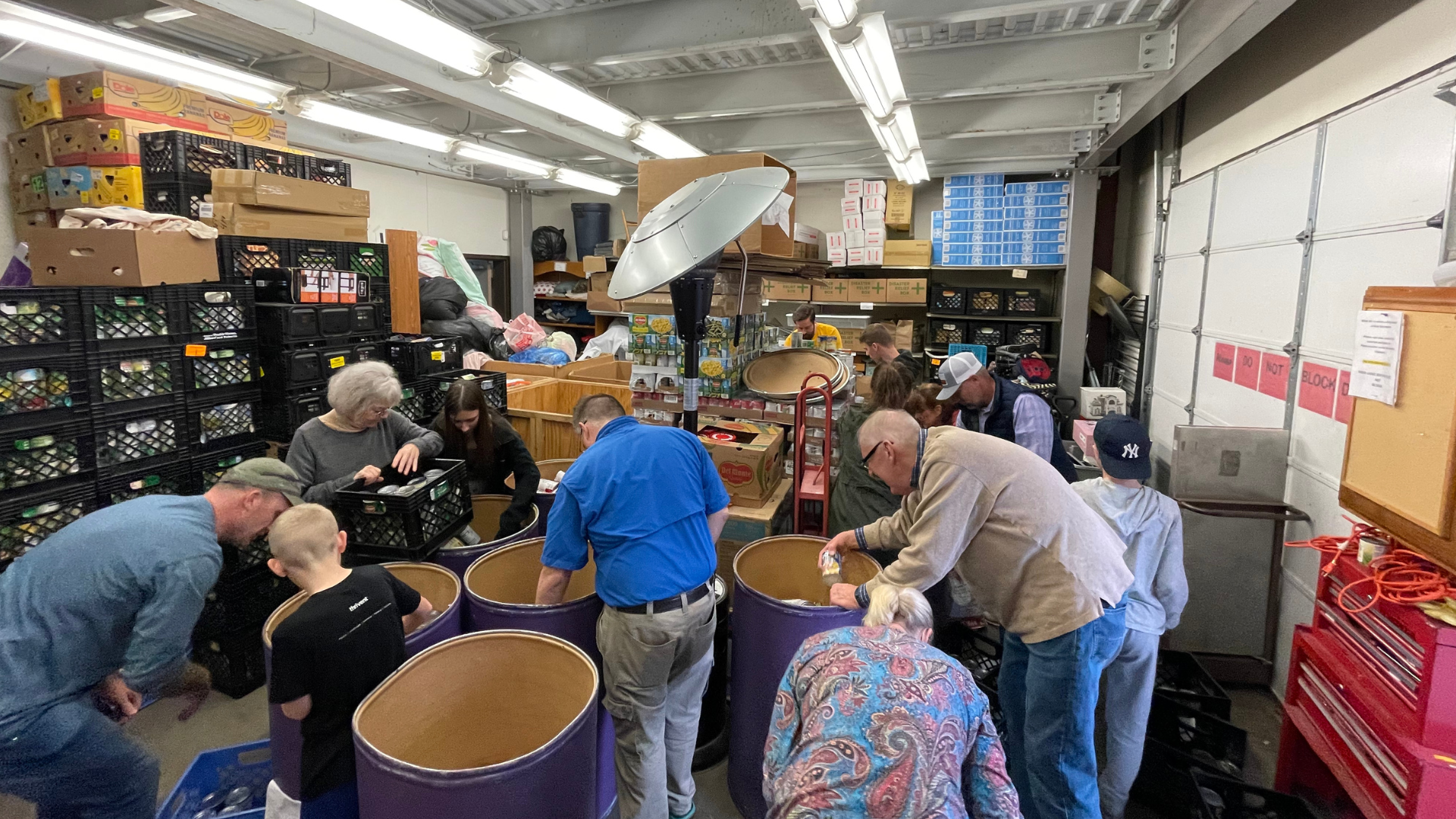
Narrative works alongside other organizations and churches to invest locally and across the state for the sake of loving our neighbors.




Copyright 2026 Narrative Church
All Rights Reserved.